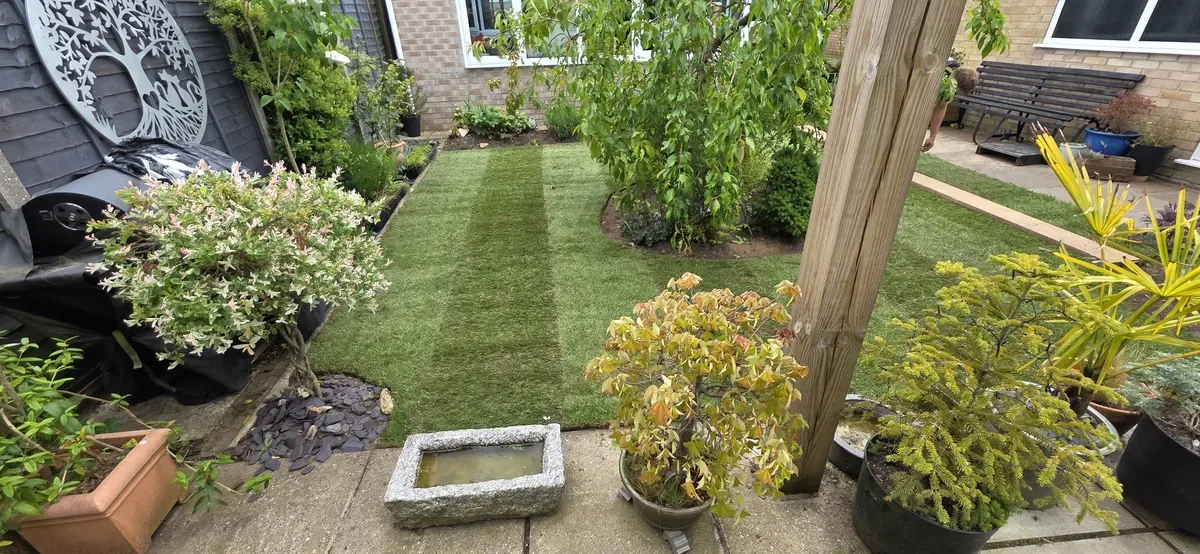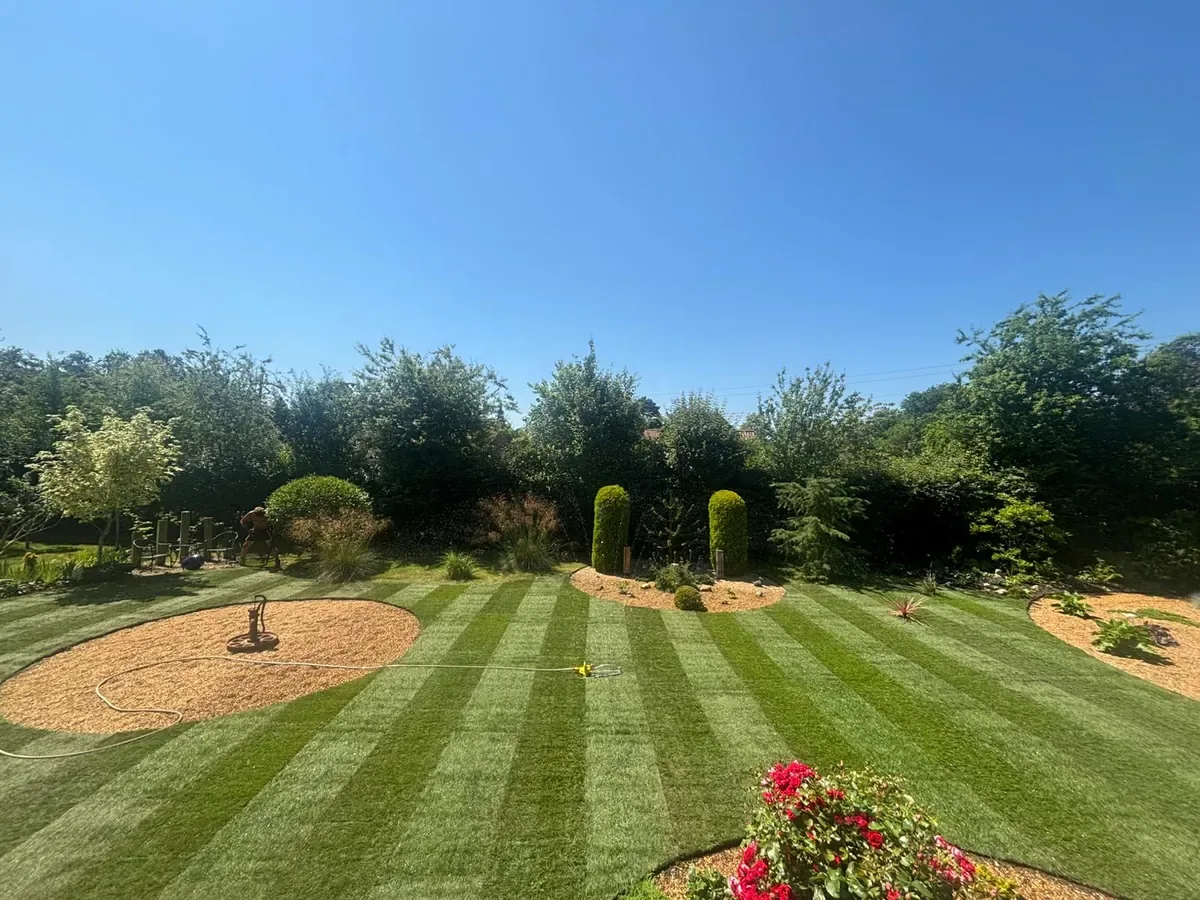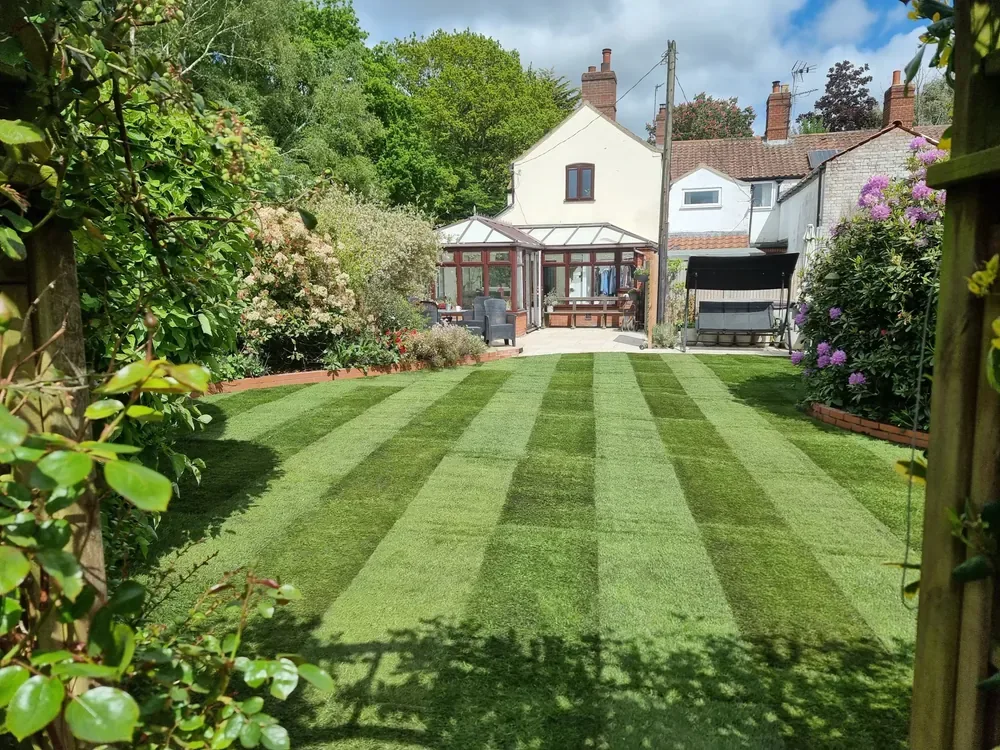
James Steven Landscapes & Lawns Ltd is a landscape gardening company in Norwich, and a big part of what we do is new lawn installation for homes and gardens across the area. A new lawn looks simple once it's down, but the work underneath it is what decides whether it thrives or struggles. Here's how the job runs, start to finish, so you know what to expect before anyone turns up with a spade.
Step one: looking at the garden
Every lawn starts with a look at the ground. We check what's already there, how wet the soil gets, how much sun the area sees and whether water drains away or sits in puddles after rain.
Soil in and around Norwich varies a lot. Some gardens have light, sandy ground that drains fast and dries out in summer. Others sit on heavier clay that holds water through winter. The ground you've got changes the prep work, so this first look matters more than people expect.
We also measure up properly. That tells us how much turf or seed is needed and whether any edges need shaping, cutting in or squaring off.
Things worth mentioning early
- Shade from trees, fences or the house
- Where downpipes and gullies empty out
- Whether you want a mower-friendly straight edge or a curve
- Any plans for a patio, path or shed later on
If you're thinking about patio and paving at the same time, it's far easier to do the hard landscaping first and lay the lawn up to it.
Step two: clearing the old ground
Old turf, weeds, rubble and roots all have to come out. A new lawn laid over a tired one won't root properly and the old growth pushes back through.
We strip the existing surface, take out stones and debris, and deal with persistent weeds like couch grass or bindweed before anything new goes down. Everything that comes out gets cleared away, so you're not left with heaps of old turf in the corner.
Step three: levelling and preparing the base
This is the stage that makes or breaks a lawn. The ground gets dug over or rotavated so it isn't compacted, then graded to the right levels.
A good lawn needs a gentle fall away from the house, no dips that collect water and no high spots that the mower scalps. We rake it out, firm it down by treading or rolling, then rake again. It's slow, repetitive work, but a flat, firm bed is the only way to get a surface that mows evenly.
Where the soil is poor or thin, we add topsoil to give the grass roots something to grow into. Where drainage is a real problem, that gets sorted before any turf arrives, because turf laid on waterlogged ground will yellow and thin out within a season.
If your existing lawn is bumpy rather than beyond saving, lawn levelling may be a better fit than starting again.
Step four: turf or seed
Both work. They suit different situations.
Turf gives you a finished lawn the same day. It's the usual choice if you want the garden usable quickly, if you've got children or a dog, or if the ground slopes and loose seed would wash off. It costs more per square metre but the result is instant.
Seed is cheaper and lets you pick a mix suited to shade, hard wear or fine ornamental grass. The trade-off is time: you'll be waiting weeks for coverage and months before it takes real use. Spring and early autumn are the sensible sowing windows. We cover this in more detail on our lawn seeding page.
Step five: laying the turf
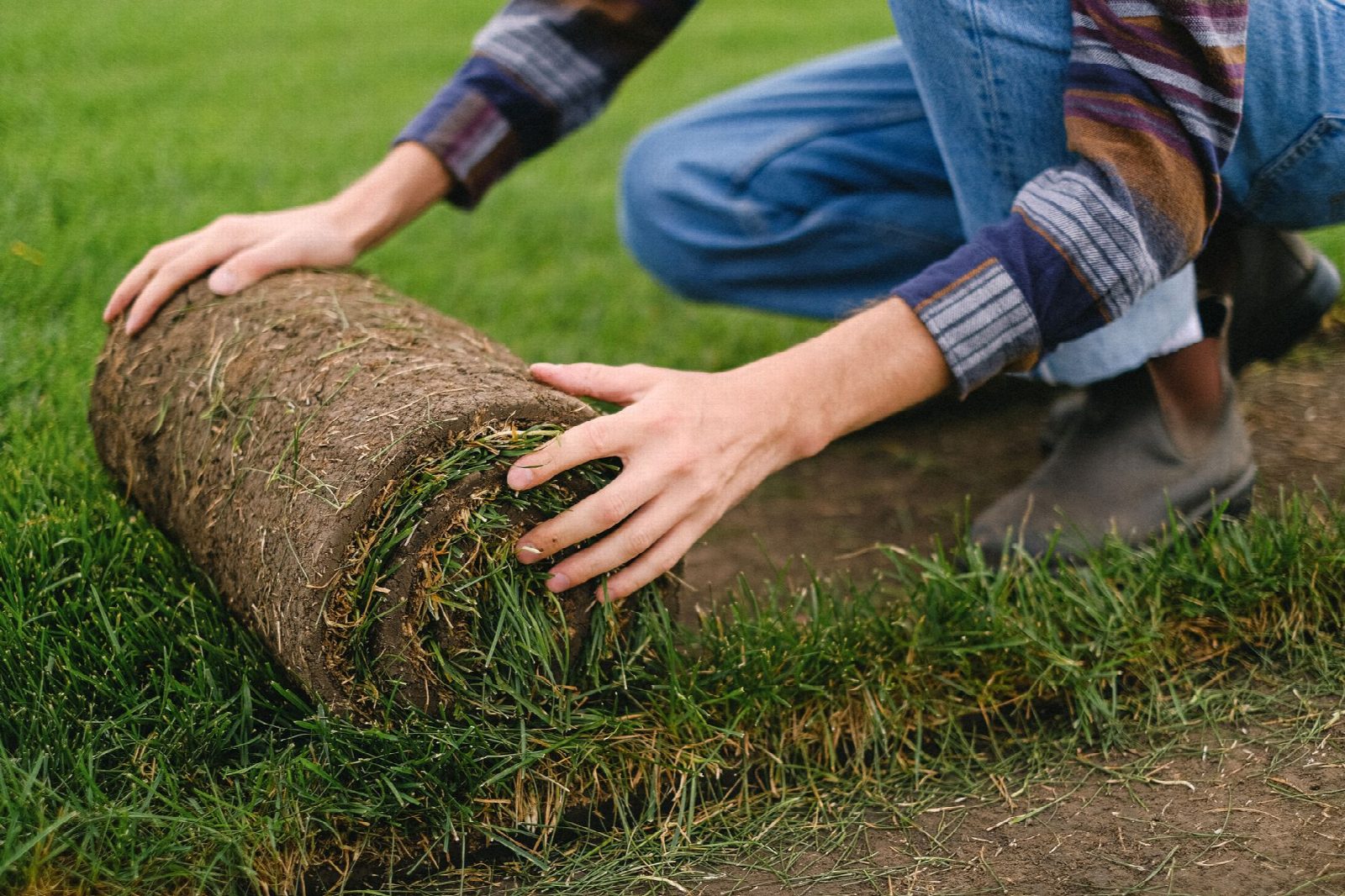
Turf is a fresh product. It's cut, delivered rolled up, and it starts to deteriorate from that moment, so it goes down quickly once it arrives.
We start from a straight edge, usually a path or a patio, and work across in rows. Joints are staggered like brickwork so there's no long seam running through the lawn. Each roll is butted tight against the last, with no gaps and no overlaps, because gaps dry out and turn brown at the edges.
We work from boards laid on the new turf rather than walking directly on it, which stops footprints and dents forming in the soft bed underneath. Edges and curves are cut to shape with a turfing iron or half-moon edger.
Once it's all down, the whole lawn is rolled or firmed to press the roots into contact with the soil, then given a thorough soaking. Not a sprinkle, a proper soak that goes right through the turf into the soil below.
Aftercare in the first few weeks
New turf needs water, and plenty of it. For the first two to three weeks, it needs watering every day in warm weather, enough that the soil under the turf stays damp. Lift a corner and check if you're unsure.
Keep off it as much as you can while it roots. After two or three weeks, test a corner: if it resists being lifted, the roots have taken.
First cut comes once the grass reaches about 5cm, with the mower set high. Take only the top off. Drop the height gradually over the next few cuts rather than scalping it in one go.
We'll run through all of this with you on the day, so you're not guessing.
Ready for a new lawn?
If you'd like a new lawn laid in Norwich or the surrounding villages, give James Steven Landscapes & Lawns Ltd a ring on 01603 265243 and we'll come and take a look at your garden.