A beautiful new lawn starts well below the surface. Before a single roll of turf is laid or a grass seed is sown, the condition of your soil determines how well your lawn will establish, how evenly it will grow, and how resilient it will be through the dry Norfolk summers and wet winters that follow. Rushing the preparation stage is one of the most common reasons new lawns fail, and it is a mistake we see time and again when homeowners call us in to rescue a struggling lawn shortly after installation.
In this guide, our team explains the ground preparation process we follow before every new lawn installation, and why each step matters for gardens across Norfolk and the wider East Anglian region.
Why Ground Preparation Matters More Than You Might Think
Grass roots need three things to thrive: nutrients, moisture, and air. Compacted, stony, or nutrient-poor soil restricts all three. Norfolk soils vary considerably depending on where you are. Sandy, free-draining soils are common across much of the county, particularly in the Breckland area, and while these drain well, they struggle to hold moisture and nutrients. Heavier clay soils are found in other parts of the region and bring the opposite challenge: poor drainage, waterlogging, and a tendency to compact under foot traffic.
Understanding your soil type is the first step. Our team will assess the ground before any work begins, so we can tailor the preparation to your specific site rather than applying a one-size-fits-all approach.
Clearing the Site
Before any cultivation begins, the area needs to be cleared completely. This means removing all existing vegetation, including old grass, weeds, moss, and any debris. If there is an established lawn already in place, it needs to be stripped back to bare earth. We use appropriate machinery for larger areas to ensure this is done thoroughly and efficiently.
Perennial weeds such as couch grass, dock, and bindweed must be dealt with carefully at this stage. Any roots left behind will regenerate and push up through your new lawn within weeks of laying. We take care to remove as much root material as possible during cultivation, which is why thorough rotovating or forking of the soil is essential rather than a quick once-over.
Cultivation and Breaking Up Compaction
Once the site is clear, the soil needs to be broken up and aerated. Compacted ground prevents roots from penetrating deeply, which means your lawn will struggle during dry spells as shallow roots cannot access moisture from further down. It also restricts drainage, leading to waterlogging and moss growth in wetter months.
We rotovate or manually cultivate the top 15 to 20 centimetres of soil, breaking up any hard pans and improving the overall structure. For sites with significant compaction, such as former building plots or areas subjected to heavy vehicle use, this stage can take considerable effort. It is worth investing the time to do it properly.
If your garden has significant undulations or low spots, this is also the stage at which we address any levelling requirements. Our lawn levelling service can correct uneven ground before the new surface is established, giving you a smooth, professional finish and preventing drainage problems caused by hollows collecting water.
Improving the Soil with Topsoil and Organic Matter
After cultivation, we assess whether the existing soil provides a sufficient growing medium. On many Norfolk sites, particularly those with very sandy or very stony soil, or where the topsoil has been stripped during construction, we recommend adding quality screened topsoil to build up the growing layer to an adequate depth.
A minimum depth of 10 centimetres of good topsoil is generally required for a healthy lawn. Where the existing soil is very poor, we may recommend a deeper layer. Organic matter such as well-rotted compost can also be incorporated at this stage to improve moisture retention in sandy soils and help break up heavy clay soils, improving drainage and aeration.
Getting the soil right at this point pays dividends for years. A new lawn laid over poor, thin soil will always struggle, however well the turf or seed is chosen.
Raking, Firming, and the Final Seedbed
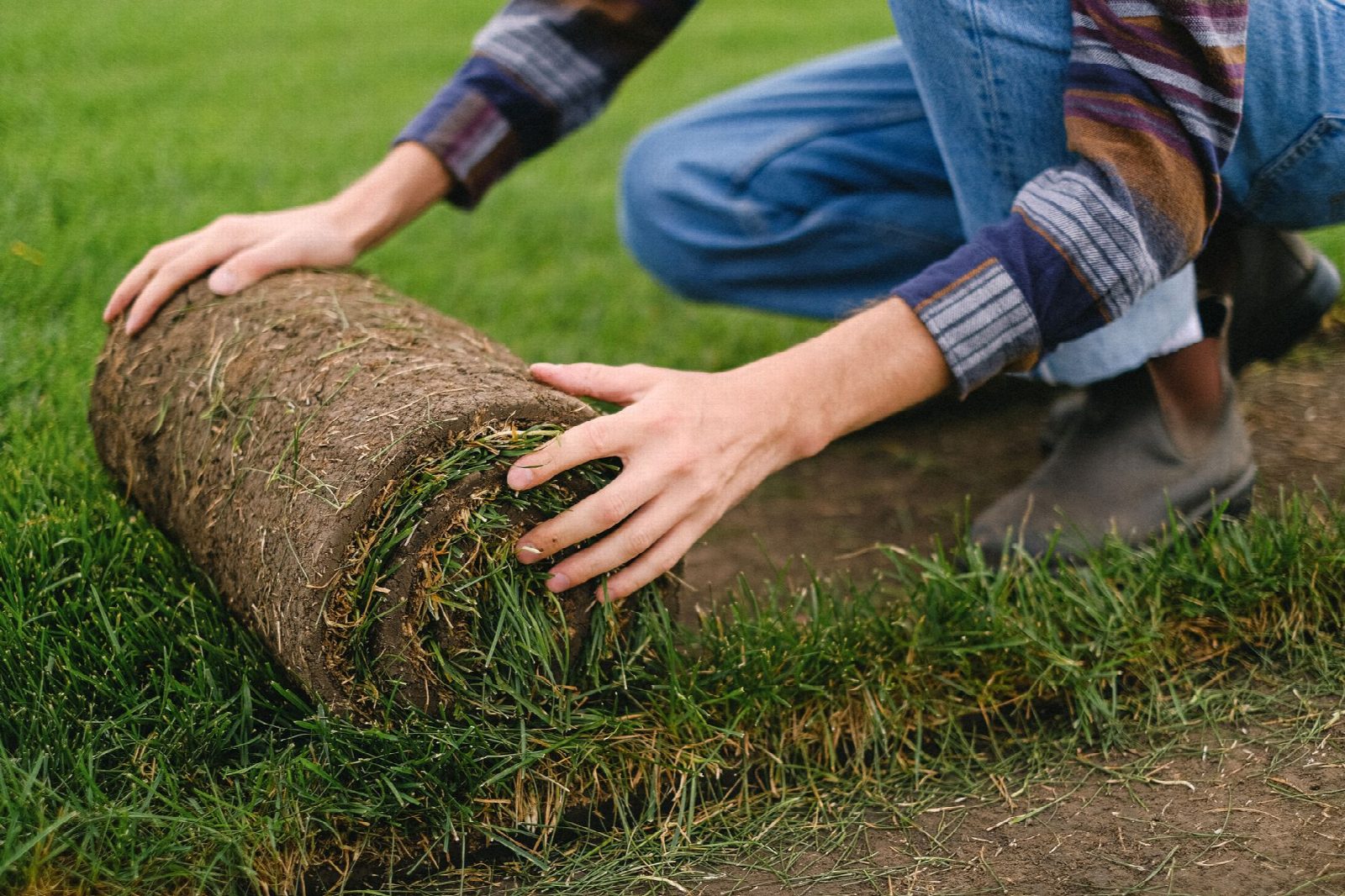
With the soil improved and levelled, the final preparation involves creating a fine, firm seedbed. We rake the surface to remove stones and break down any remaining clods, then firm the ground by treading methodically across the entire area. This removes air pockets and creates good contact between the soil and the turf or seed.
The surface is raked again after firming to produce a light, crumbly tilth. For turf laying, this means the rolls sit evenly and root into the soil quickly. For seeding, it creates the ideal conditions for good germination and early root development. Our lawn seeding service follows this same preparation process to give seed the best possible start.
A pre-seeding or pre-turfing fertiliser is applied at this stage to give the new lawn an initial supply of nutrients to fuel early growth and root establishment.
Drainage Considerations for Norfolk Gardens
Drainage is a consideration that is easy to overlook until after installation, when puddles appear after every shower. Poorly drained ground leads to waterlogging, which kills grass roots, encourages moss, and creates unpleasant, unusable lawn surfaces in winter.
During the preparation stage, our team assesses whether the natural drainage of the site is adequate. For gardens with persistent drainage problems, we may recommend the installation of a simple drainage solution prior to laying the new lawn. Addressing drainage before you lay turf or sow seed is far more straightforward and cost-effective than trying to remedy problems afterwards.
If you are unsure whether drainage might be an issue on your property, our team is happy to advise. You can find out more about the areas we cover and get in touch via our locations page.
Ready to Get Started?
Thorough ground preparation takes time and effort, but it is the single most important factor in the long-term success of your new lawn. Our team brings the experience, equipment, and local knowledge of Norfolk soils to every project we undertake, giving your new lawn the strongest possible foundation.
To learn more about our full range of lawn replacement and installation services, visit our lawn replacement page or speak to our team directly. We are always happy to visit your garden, assess the ground conditions, and recommend the right approach for your site.